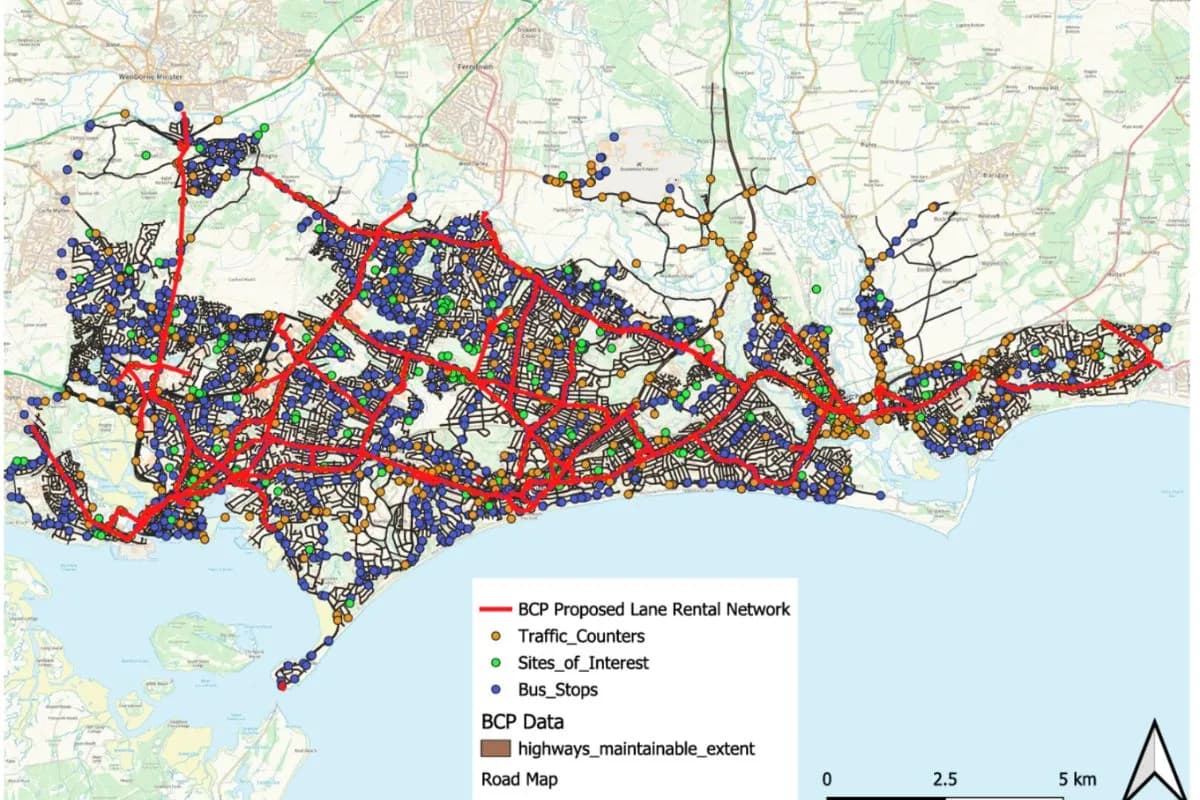
New powers to significantly reduce roadwork disruption across Bournemouth, Christchurch and Poole’s busiest roads have been formally approved by Government.
The powers – known as Local Lane Rental Schemes (LLRS) – see daily charges for road works on a local authority’s busiest roads: encouraging work to be carried out at off-peak times and more collaboratively - creating less disruption.
Lane Rental charges apply to both Council and contractor roadworks and the income received is specifically ringfenced to operate the scheme with 50% of any surplus invested into road maintenance and measures to further reduce roadwork disruption.
The powers have been introduced in a handful of local authorities nationally and have delivered significant improvements – reducing congestion and the duration of roadworks.
In the first 16 months of a LLRS being in operation in West Sussex, it has:
reduced the time taken for roadworks by a combined 3,083 days
seen the length of time taken for utility roadworks shortened by 32.48%
Cllr Andy Hadley, BCP Council’s portfolio holder for highways, said: “We know just how frustrating roadworks can be for our residents – but we also know how important it is to improve our transport network, infrastructure and maintain and renew essential services.
“These new powers are a really significant step forward and have been proven to work in other areas across the country.
“As the first local authority in the South West to be implementing these powers I am really pleased that our application has been given the go-ahead and our officers will now get to work on the finer details before they come into effect next spring.”
To get approval for the scheme, BCP Council had to first carry out a public consultation on the proposals and then submit a detailed application to the Secretary of State for Transport.
More than 75% of those who responded to the consultation supported the proposals and, in June 2026, the Secretary of State formally approved the plans.
Government-endorsed Lane Rental Schemes allow a highway authority (a council) to charge up to £2,500 a day for works on its busiest roads – the daily rate varies depending on the type of work, when they will be carried out, and the disruption it is expected to cause.
The fees are designed to encourage companies and contractors to plan work more effectively, so that less time is needed to complete them, and to carry out their work during quieter times.